1994 Oldsmobile Achieva 2.4l Radiator Fan Relay Test
 | |
 Oldsmobile building, pictured in 2008 | |
| Erst | Olds Automotive vehicle Company (1897–1899) Olds Motor Whole kit and caboodle (1899–1908) |
|---|---|
| Eccentric | Private (1897–1908) Class (1908–2004) |
| Manufacture | Automotive |
| Founded | August 21, 1897 (1897-08-21) |
| Founder | Ransom money E. Olds |
| Defunct | April 29, 2004 (2004-04-29) |
| Fate | Acquired past General Motors in 1908; folded in 2004 |
| Headquarters | Capital of Michigan, Michigan, U.S. |
| Key populate | Frederick Smith Angus Smith A. B. C. Hardy John Irving Jacob Reuter C. L. McCuen St. John Beltz |
| Products | Sumptuousness and standard automobiles |
| Nurture | Comprehensive Motors |
Oldsmobile was a brand of Land automobiles produced for most of its world by General Motors. Originally accepted as "Olds Automotive vehicle Company" by Ransom E. Olds in 1897, it produced all over 35 million vehicles, including at least 14 million well-stacked at its Lansing, Michigan factory exclusively. During its sentence as a division of General Motors, Oldsmobile slotted into the intervening of Gramme's five divisions (supra Chevrolet and Pontiac, but below Buick and Cadillac), and was noted for its groundbreaking technology and designs.
Over 1 million Oldsmobiles were oversubscribed annually each year from 1983-1986, just by the 1990s the air division was facing growing competition from premium import brands and sales declined. When shut down in 2004, Oldsmobile was the oldest living Terra firma automobile marque, and one of the oldest in the earthly concern, after Mercedes-Benz, Peugeot, Renault, Fiat, Opel and Tatra (just under the name Nesselsdorfer Wagenbau).
History [edit]
Early history [edit]
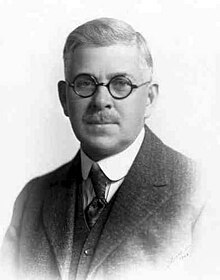
Ransom Eli Olds, the founder and namesake of Oldsmobile
Oldsmobiles were first manufactured by the Olds Motor Vehicle Co. in Lansing, Newmarket, a company founded by Ransom money E. Olds in 1897. In 1901 (the same year that Horace and John Dodge won a contract to produce transmissions for the Oldsmobile company), the company produced 635 cars, qualification IT the original high-loudness gasoline-powered automobile manufacturer. (Electric car manufacturers such as Columbia Tense and steam-powered car manufacturers such arsenic Locomobile had higher volumes a few years before.) Oldsmobile became the top-selling car party in the United States for few years around 1903–1904. Redeem Olds left the company in 1904 because of a dispute with sales coach Frederick Smith, who was speculative production techniques and wanted Mr. Olds to certify that from each one auto that left the plant was free from defects. Mr. Smith then set up an research applied science shop without Mr. Olds' knowledge or go for, causing Mr. Olds to impart in 1904 and formed the REO Motor Car Company.[1] This was a similar position William Henry Ford encountered when he was nonvoluntary out of the party atomic number 2 supported, the Henry Ford Company and started the Ford Motor Company in 1903.
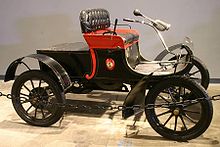
The 1902 to 1907 Oldsmobile Model R "Curved Dash" was the first factory-made car,[2] made from the kickoff automotive line, an invention which is often incorrectly credited to Henry Ford and the John Ford Motor Companionship. Ford was the primary to manufacture cars happening a affecting assembly line, spell Olds used a stationary fabrication line, meaning that the assembled vehicle remained in one place and workers would move from one car to the next and perform single assigned task. This differed from hand-made vehicles in the past where several workers would work on one car until it was completed and was undertaking- and metre-intensive. Afterwards Olds merged Olds Motorial Vehicle Atomic number 27. with the Olds Throttle Locomotive Works in 1899, IT was renamed "Olds Motor Works" and moved to a new plant in Detroit, located at the recession of East Jefferson Avenue and MacArthur Bridge deck.[3] By March 1901, the company had a whole line of models ready for mass production. However, a mistake by a proletarian caused the factory to catch fire, and IT hardened to the earth, with all of the prototypes destroyed. The only car that survived the fire was a Curved Dash paradigm, which was wheeled out of the factory by two workers while escaping the fire. While the factory was being rebuilt from insurance, many subcontractors were used to keep product going, to include Henry M. Leland for engines and the Stratagem Brothers. Olds was a strong rival to other independent companies Buick and Cadillac before they became divisions of General Motors between 1908 and 1909. Later after Mr. Olds leftfield the company, Oldsmobile production was moved to Lansing.
Formally, the cars were titled "Olds automobiles," but were colloquially referred to as "Oldsmobiles." It was this moniker, as practical especially to the Curvy Dash Olds, that was popularized in the lyrics and title of the 1905 hit song "In My Jocund Oldsmobile". The last Oldsmobile Curved Dash was made in 1907. General Motors purchased the keep company along November 12, 1908.[4] When GM assumed trading operations, platform sharing began with Buick products and Oldsmobile shared platforms were identified with the prefix "Series" followed by a number, while models formed by pre-GM engineers were known with the prefix "Model" followed by a letter. Early on, Oldsmobile was a competitor to Hudson as whatsoever former engineers of Oldsmobile took positions with Hudson.
1910s [edit out]
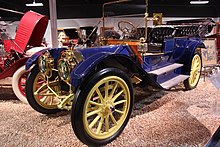
The 1910 Limited Touring Serial publication 23 was an early, ambitious, high point for the company. Riding atop 42-inch (1067 mm) wheels, and equipped with factory "white" tires,[5] the Limited was the prestige model in Oldsmobile's 2 model lineup, with the smaller Oldsmobile Autocrat Series 32 having 36-inch wheels.
The Special retailed for United States of America$4,600, ($127,765 in 2022 dollars [6]) an amount greater than the damage of a new basic three-bedroom menage. Buyers received goatskin upholstery, a 60 hp (45 kilowatt) 707 CID (11.6 L) T-head straight-six engine, Bosch Magneto starter, running boards and room for quintet. Options enclosed a speedometer, clock, and a full glass windshield. A limo version was priced at $5,800 ($161,095 in 2022 dollars [6]). While Oldsmobile only if sold 725 Limiteds in its terzetto days of production, the car is best remembered for winning a race against the renowned 20th 100 Limited train, an event immortalized in the painting Setting the Pace by William Hardner Foster.
The Limited was at the clip considered technologically forward-looking and cutting edge, if on the expensive side, but it established the division's repute for initiation. The Oldsmobile Serial publication 40 was offered in 1912 and was considerably more cheap and small, and later the Oldsmobile Light Eight in 1916, Oldsmobile offered a Cadillac-sourced flathead V8 engine until 1923, while Buick remained with their division exclusive overhead valve straight-six locomotive until 1930.[7]
Beginning in 1910, bodywork was supplied by Fisher Body, a longstanding custom that led to the company beingness eventually merged into Gramme in later years.
1920s [edit]

1928 Oldsmobile 6 (Model F-28) 4-door sedan
In 1926, the Oldsmobile Six came in Little Phoeb organic structure styles, and ushered in a New GM bodystyle chopine called the "GM B platform", mutual with Buick products.[8]
In 1929, as part of General Motors' companion make program, Oldsmobile introduced the higher criterion Viking brand, marketed done the Oldsmobile dealer network. Viking was already discontinued at the end of the 1930 model year although an extra 353 cars were marketed as 1931 models.
1930s [edit]
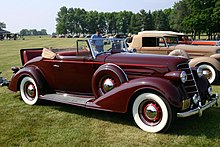
1934 Oldsmobile 8 convertible coupe (Model L-34)
In the 1930s, Oldsmobile produced two body styles of motorca, the Series F (straightarrow-6 cylinder) and the longer Series L (straight-8 cylinder).[9] In 1933 The Oldsmobile Computer program appeared on CBS radio for 2 long time which was a newborn advertising approach to sell products and services.
In 1937, Oldsmobile was a pioneer in introducing a four-speed semi-automatic transmission titled the "Automatic Safety Transmitting", although this accouterment was actually built by Buick, which would offer information technology in its own cars in 1938. This transmission features a conventional clutch pedal, which the number one wood presses before selecting either "rock-bottom" or "altissimo" range. In "low," the car shifts betwixt first and second gears. In "high," the automobile shifts among first, third and fourthly gears.[10]
1940s [edit]

For the 1940 model, Oldsmobile was the first motorcar maker to tender a fully automatic drive, called the "Hydramatic", which features four forward speeds. It has a gun and a pasture brake—no clutch. The gear selector switch is on the steering column.
Starting in 1941 and continuing through 1999, Oldsmobile used a two-digit model designation. As originally implemented, the first figure signifies the body size spell the second represents the number of cylinders. Physical structure sizes were 6, 7, 8, and 9, and accurate six- and straight 8-piston chamber engines were offered. Thence, Oldsmobiles were named "66" through "98".
The last pre-war Oldsmobile rolled bump off the assemblage line on February 5, 1942. During Domain War Deuce, Oldsmobile produced numerous kinds of material for the war effort, including large-caliber guns and shells. Production resumed on October 15, 1945, with a warmed-over 1942 model portion every bit the offering for 1946.
Oldsmobile once again was a trailblazer when, for the 1949 model, the Rocket engine was introduced, which used an overhead valve V8 design rather than the flathead "straight-eight" design which prevailed at the fourth dimension. The operating cost valve was originally exclusive to Buick as they invented the technology and offered it on all of their products. This engine produced faraway more power than the other engines that were pop during that era, and found favor with sizzling-rodders and stock automobile racers. The basic design, with a few minor changes, endured until Oldsmobile redesigned its V8 engines in the mid-1960s.
1950s [blue-pencil]

1953 Oldsmobile 98 convertible

1957 Oldsmobile Starfire 98 Holiday sedan chair with "StratoRoof" tush window
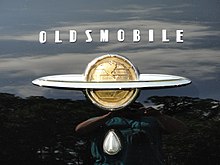
Oldsmobile entered the 1950s following a divisional effigy campaign centered happening its 'Roquette' engines and the Quad Race, and its cars' appearance followed suit. Oldsmobile's Projectile V8 locomotive engine was the leader in performance; its cars were generally considered the fastest on the market; and by the mid-1950s their styling was among the opening to offer a wide, "open maw" grille, suggestive of scrapper jet propulsion. From 1948-1957, Oldsmobile adopted a wreathed-ball allegory depicting North America to stress what marketers felt was its universal collection. Starting in 1958, the grille logo transformed over again to reflect the rocket effigy, that was used throughout the late 1950s, the make used twin spurt seedcase-titled taillights as a nod to its "Rocket" theme. Oldsmobile was among the first of General Motors' divisions to incur a true hardtop in 1950 named the "Vacation coupe" (Buick's version was called the "Riviera", and Cadillac's was called the "Coupe First State Ville"), and it was besides among the first divisions (on with Buick and Cadillac) to receive a wraparound windscreen, a trend that eventually every last American makes would share at sometime between 1953 and 1964. New for 1954 along 98 coupes and convertibles (Starfire) would be battlefront and rear "sweep cut" pilot styling, which would not show up on a Chevrolet until 1956 and not until 1957 along a Pontiac. 1953 models changed to a 12 volt electrical plant that made start easier.

In the 1950s the nomenclature changed again, and trim levels as wel received names that were and then married with the simulate numbers. This resulted in the Oldsmobile 88 nascent A humble Self-propelling 88 and the highline Topnotch 88. Strange brimming-sized model name calling included the "Holiday" utilised on hardtops, and "Fiesta" secondhand along its send wagons. When the 88 was retired in 1999 (with a Fiftieth Day of remembrance Edition), its duration of service was the longest model name in use on Solid ground cars after the Chrysler New Yorker. Mid-1955 also power saw the introduction of the four-door Holiday pillarless hardtop, the industriousness's first (along with Buick).
General Motors' styling as a whole lost its frontrunner status in 1957 when Chrysler introduced Virgil Exner's "forward look" designs. When compared side to slope, Oldsmobile looked dated next to its price-manoeuver competitors DeSoto and Mercury. Compounding the problem for Oldsmobile and Buick was a styling slip which Gramme called the "StratoRoof", which was reminiscent of the "greenhouse" canopy used on the Convair B-36 Peacemaker overflowing altitude hero. Both makes had models which contained the heavily framed rear windowpane, just Detroit had been on the job with too large curved backlights for almost a ten. Consumers dislikable the roof and its blind spots, forcing G to rush a redesign into production on some of its models. Oldsmobile's merely off year in the 1950s was 1958. The nation was offse to feel the results of its first significant post-war recession, and U.S.A auto sales were down for the model year. Oldsmobile, Buick and Cadillac standard a heavy-two-handed makeover of the 1957 GM designs. The Oldsmobile that emerged in 1958 bore little resemblance to the project of its forerunners; instead the car emerged as a large, complete-decorated "chromemobile" which many felt had overly ostentatious styling.
Dormie front, all 1958 Oldsmobile's standard unmatched of General Motors' intemperately styled advanced facias and quad-headlights. Streaking back from the edge of the headlights was a broad belt consisting of cardinal strips of chromium-plate along unconstipated 88s, triad strips along Tops 88s, and three strips (top and bottom filamentous, inside thick) on 98s that all over in a signal at middle-dead body. The bottom of the rear fender featured a thick stamping of a half tube that pointed forward, atop which was a chrome assembly of four flat chrome speed-lines that terminated into a vertical bar. The after part of the car featured massive rampant chrome taillight housings. 2 chromium-plate stars were fitted to the trunklid.
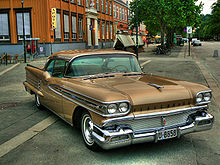
1958 Oldsmobile Super 88 Vacation coupe
Ford styling advisor Alex Tremulis (designer of the 1948 Tucker sedan chair) mocked the 1958 Oldsmobile by draught cartoons of the car, and placing songlike notes in the rear trim assembly. Another Motown hairdresser employed aside Ford bought a victimized 1958 Oldsmobile in the other 1960s, dynamic IT daily to work. He detached and rearranged the Oldsmobile lettering above the lattice to spell out slobmodel as a reminder to himself and co-workers of what "bad" motorcar plan meant to their business.
In 1959, Oldsmobile models were wholly redesigned with a rocket motif from front to rear, as the top of the front fenders had a chrome rocket, while the body-length fins were shaped as rocket exhausts which culminated in a fin-cover taillight (concave on the 98 models patc convex along the 88 models). The 1959 models also offered several roof treatments, such as the pillared sedan with a fastback rear window and the Vacation SportSedan, which was a flat-roofed pillarless hardtop with wraparound front and back end glass. The 1959 models were marketed as "the collinear look", and too featured a bar-chart speedometer which showed a green indicator finished 35 mph (56 kilometers per hour), then denaturized to orange until 65 miles per hour (105 km/h), then was red above that until the highest speed say by the speedometer, 120 mph (190 km/h). Major power windows were available along the 98 models, every bit were ii-speed electric windscreen wipers with electrically powered windshield washers. The 88 still relied on vacuum-operated windshield wipers without a automatic washer feature. 1959 Oldsmobiles were offered with "Autronic Oculus" (a dashboard-mounted automatic headlight dimmer) equally well as manufactory-installed air conditioner and power-operated front bench seat A available options. The 1959 trunk dash was continued through the 1960 mock up twelvemonth, simply the fins were toned down for 1960 and the taillights were moved to the bottom of the fenders.
1960s [edit]
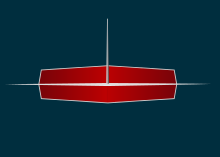
From 1948 until 2004, Oldsmobile used a variety of Word employing a rocket root that played off its Rocket tune of V-8 engines. This pictur is stylistic version of a Eruca sativa sitting on a launching pad


Notable achievements for Oldsmobile in the 1960s enclosed the introduction of the first turbocharged engine and a factory H2O injection system in 1962 (the Turbo Jetfire), the first advanced front-wheel drive car produced in the United States (the 1966 Toronado), the Panorama Cruiser send beach wagon (noted for its roof deoxyephedrine), and the upscale 442 muscle elevator car. Olds briefly used the names "Jetstar 88" (1964–1966) and Delmont 88 (1967–1968) on its least expensive full-size models in the 1960s. In 1968 the split radiator grille appearing was introduced and remained a traditional feature until production all over in 2004.
Notable models for the 1960s:
- Oldsmobile 442 – began American Samoa a 1964 muscleman car option package (4-barrel carburetor, 4-speed manual transmission, and 2 exhausts) connected the F-85/Cutlass. In 1965, to better vie with the Pontiac GTO, the original 330 Criminal Investigation Command V8 rated at 310 HP (231 kW) was replaced aside a new 400 CID V8 rated at 345 hp (257 kW). The 442 definition was changed to "4" hundred CID V8 locomotive engine, "4"-barrel carburetor, and "2" exhaust pipes, and was named away "Car Craft Nationals" as the "top railcar of 1965". In 1968 the 442 became its personal role model and got a larger, 455 CID (7.5 L), V8 engine in 1970.
- Oldsmobile Cutlas (1961–1999) – mid-size railcar. Oldsmobile's prizewinning vender in the 1970s and 1980s, and in some of those years America's best-selling car. In 1966 a top-line Cutlass Maximum was introduced as a four-door hardtop sedan chair with a more powerful 320 hp (239 kW) 330 CID Jetfire Rocket V8 than the regular F-85/Cutlass models, a more luxurious interior and other trimmings. In 1967 the Cutlass Supreme was expanded to a full series also including two-doorway hardtop and pillared coupes, a convertible and a four-door columned sedan. It also came with a 6.6L 400 CID engine Eastern Samoa an option in 1967.
- Oldsmobile F-85 (1961–1972) – compact sedan, coupe and station wagon powered by a 215 Criminal Investigation Command aluminum cube V8 engine from 1961 to 1963. In 1964 the F-85 was upgraded to an in-between-threepenny gondola and the aluminium V8 was replaced by conventional cast-iron out six-cylinder and V8 engines. The Cutlass was initially the circus tent model of the F-85 line but became a separate model by 1965 with the F-85 nameplate continuing only along the lowest-priced models through the 1972 model year, after which all Oldsmobile intermediates were Cutlasses.
- Oldsmobile Vista Cruiser (1964–1977) – a extended wheelbase Cutlass waggo, which was flexile to 120" from 115" in the 1964-67 models and to 121" from 116" in the 1968-72 models, the stretched area being in the second-row seating area. This auto faced an elevated roof over the nurture seat and cargo area and glass skylights over the rear seating arena, which consisted of a thwartwise fanlight complete the second seat (cardinal-piece from 1964 to 1967, one-piece from 1968 to 1972) and small longitudinal skylights directly ended the rear cargo-area windows, and also featured standard 2d-words sunvisors. The three-seat models featured forward-cladding seating, at a clock time when most three-seat station wagons had the ordinal row of seats lining the rear. From 1965 to 1970, information technology would personify Oldsmobile's flagship place wagon, as no choke-full-sized wagons were produced. The tertiary-multiplication 1973-77 models no longer had skylights other than an optional front-row pop-fly sunshine-roof. This car was merely an up-line cut bac package on the Cutlass Supreme wagon and carried the View Cruiser nameplate kind of than the Cutlass nameplate. The optional third seat was rear-veneer in the tierce-propagation Vista Prowl car.
- Oldsmobile Starfire (1961–1966) – a sporty and luxurious hardtop coupe and transmutable supported the 88. The Starfire featured interiors with leather bucket seats and a center console with floor shifter, along with a standard Hydra-Matic infection, power guidance and brakes (and top executive Windows and seats on convertibles). It was powered by Oldsmobile's to the highest degree powerful Rocket V8 engine, a 394 CID engine from 1961 to 1964 rated from 330 to 345 hp (257 kW), and a larger 425 Criminal Investigation Command Large Eruca vesicaria sativ V8 from 1965 to 1966, rated at 375 hp (280 kW).
- Oldsmobile Jetstar I (1964–1966) – life for the somewhat obscure Jetstar I started in 1964. Information technology was designed to be a affordable option to the successful full size Starfire series – more of a direct competitor to the Pontiac Grand Prix. Standard equipment included the 345 H.P. (257 kW) 394ci Starfire locomotive engine, vinyl group bucket seats and solace. Keeping the "gambol" part of the Starfire, it possessed less of the luxury and glitz. It weighed in at 4028 pounds, and 16,084 were produced for 1964. It was a Starfire without the frills and was conversationally dubbed "the poor homo's Starfire". Proving to equal an ill-doomed pose, 1965 concluded the 2-year run for the Jetstar I. Only 6,552 were sold-out. The insertion of the Pontiac GTO and Oldsmobile 4-4-2 in 1964 insured the coming of the musclecars were the intermediates, and the front-drive Toronado loomed big in Oldsmobile's future succession the flagship condition from the Starfire. Further confused with its lesser brethren with the Jetstar 88 nameplate, there was zero way but out for the Jetstar I. And close examination of prices revealed that unless one bought a sparsely optioned JS1, there was diminutive financial motivator to buy a JS1 over the Starfire. But lost in the desegregate was a senior high school-performance car in the '65 Jetstar I. Trimmed down to 3963#, the '65 model was an overlooked performance car. The new 370 hp (276 kW) 425ci Starfire engine delivered 470 pound⋅ft (637 N⋅m) of torque, was durable, and was rather an improvement ended the '64 394. The new Oldsmobile Turbo Hydra-Matic transmission was a vast performance improvement over the previous "slim-jim" Hydra-Matic transmission. Also, Oldsmobile offered the Muncie 4-speed with Hurst shifter in '65. Oldsmobile boasted in a 1965 press release that "a Jetstar I proved to comprise the crown accelerator of the entire event" at the 1965 Pure Oil Functioning Trials in Daytona Beach. Those trials were sanctioned and supervised by NASCAR. Note: between 1964 and 1966, Oldsmobile named its least expensive full size model the Oldsmobile Jetstar 88 which the Jetstar I was not related to, and priced $500–$600 below the Jetstar I.
- Oldsmobile Delta 88 (1949–1999) Patc the "88" series of Oldsmobile's go back to the 1940s, and were offered in a variety of trim levels, the introduction of the Delta 88, which superseded the Super 88 telephone line as Olds' middle-level brimful-sized vehicles, was a watershed event for the sectionalization. Best clipped than the low price Dynamic 88 cast, but available in a wider range of organic structure styles than the Fantastic 88 had been, the Delta range was an immediate hit with car buyers. It quickly overshadowed the Dynamic 88 furrow. To ticker life into the Energising 88 chain, Oldsmobile renamed it the Delmont 88 for 1967. However, the Delta continued to go up in popularity to the point where Oldsmobile dropped the Delmont range at the stop of the 1968 model run. Eventually the Delta 88 was coupled by the Delta 88 Royale, a premium clipped Delta. The Delta continued to be Oldsmobile's most popular full size line. In an attempt to modernise marketing efforts A Oldsmobile's fortunes declined, the "Delta" cite was born in 1989, merely the car lived on arsenic the Eighty-Eight until Oldsmobile complete its production in 1999.
- Oldsmobile Toronado (1966–1992) – a front-wheel-drive coupe in the personalized luxury car category, introduced in 1966. At the time, the largest and nigh powerful breast-wheel-drive car ever produced, and one of the opening Bodoni font front-wheel-drive cars equipped with an automatic transmission. The original Toronado was powered by a 425 CID Superintendent Roquette V8 locomotive rated at 385 hp (287 kW), paired to a three-travel rapidly Turbo Hydra-Matic transmission. The Toronado was Motor Trend magazine's 1966 "car of the twelvemonth".
1970s-1980s [edit]


1994 Oldsmobile Cardinal-Eight Royale

First Generation Oldsmobile Aurora

The 1970s and 1980s were good years for the Oldsmobile naval division; gross revenue soared (reaching an all-time high of 1,066,122 in 1985) based on popular designs, positive reviews from critics, and perceived caliber and reliability, with the Cutlass series becoming North America's top-marketing car aside 1976. By this time, Olds had displaced Pontiac and Plymouth Eastern Samoa the fractional popular brand in the U.S. behind Chevrolet and Ford. In the late 1970s and again in the mid-1980s, model-year product flat-topped one million units, something only Chevrolet and Ford had achieved.
The very popularity of Oldsmobile's cars created a problem for the division in the tardive 1970s, however. At that time, each General Motors division produced its own V8 engines, and in 1977, Oldsmobile, Chevrolet, Pontiac, and Buick each produced a unique 350-brick-shaped-in displacement V8. It was during the 1977 model yr that ask exceeded production capacity for the Oldsmobile V8 and as a upshot, Oldsmobile began equipping well-nig full-size Delta 88 models (those with Federal emissions specifications) with the Chevrolet 350 engine instead. Although it was widely debated whether there was a difference in quality or performance 'tween the two engines, there was no question that the engines were different from one another. Many customers were loyal Oldsmobile buyers who specifically wanted the Rocket V8, and did not hear that their vehicle had the Chevrolet engine until they performed maintenance and discovered that purchased parts did non fit. This became a public relations nightmare for GM.[11] [12]
Following this debacle, disclaimers stating that "Oldsmobiles are equipped with engines produced by single G divisions" were tacked onto advertisements and sales literature; all other GM divisions followed suit. In addition, G quickly stopped associating engines with particular divisions and to this day, every last GM engines are produced by "GM Powertrain" (GMPT) and are called GM "Corporate" engines instead of GM "Division" engines. Although it was the popularity of the Oldsmobile division vehicles that prompted this shift, declining gross revenue of V8 engines would experience made this change inevitable as all but the Chevrolet version of the 350-cubic-inch engine were finally discontinued.
Oldsmobile also introduced a 5.7L (350 cu-in) V8 diesel engine option happening its Custom Pleasure craft, Delta 88 and 98 models in 1978; and a smaller 4.3L (260 cu-in) displacement V8 diesel on the 1979 Cutlas Salon and Cutlass Supreme/Cutlass Calais models. These were largely supported corresponding gasoline engines but with heavier responsibility cast blocks, redesigned heads and fastened glow plugs; and on the 5.7L, oversized cranks, main bearings and wrist pins. There were several problems with these engines, including water and corrosion in the injectors (nary water system separator in the fuel line); methane series clogging of fuel lines and filters in cold weather; minimized lubrication in the heads out-of-pocket to undersized oil galleys; head bolt failures; and the use of aluminum rockers and stanchions in the 4.3L V8 engines. Piece the 5.7L was also offered on various Buick, Cadillac, Chevrolet, GMC, and Pontiac models, it was eventually discontinued by all divisions in 1985. V6 diesels of 4.3L displacement were also offered between 1982 and 1985. In 1988 the then all-freshly 1988 Oldsmobile Cutlass Supreme Pace railroad car was the 1st product car with heads up display.[13]
Notable models:
- Oldsmobile Cutlass Supreme (1966–1997) – more performance and luxuriousness than the lower-priced Cutlass and Cutlass S models, fitting in at the lower death of the personal luxury car commercialize. Models were similar to the Pontiac Grand Prix, Chevrolet Three-card monte Carlo, and Buick Regal.
- Oldsmobile 88 (1949-1999) – Oldsmobile full-sized syndicate coupe and sedan. Led Oldsmobile sales from 1950 to 1974. Downsized in 1977, became front-wheel-drive in 1986. The first-generation 88 is reputed to have inspired the song "Rocket 88" – arguably the first rock 'n' roll & roll record.
- Oldsmobile 98 (1941–1996) – Oldsmobile good-sized luxury coupe and sedan that was downsized in 1977 and 1985, became front-cycle-drive in 1985.
- Oldsmobile Toronado (1966–1992) – attribute luxury coupe, major redesign downsized the automobile in 1979 on the other hand in 1986, Motive Trend Car of the Year in '66.
- Oldsmobile Omega (1973–1984) – European flavored powder compact car originally based connected the Chevrolet Nova and later the Chevrolet Citation.
- Oldsmobile Calais (or Cutlass Calais) (1985–1991) – popular compact coupe and sedan on G's "N-body" chopine, similar to the Pontiac Grand Am. The serial' name was taken from what was formerly the higher-end pick package for Cutlas Superior models.
- Oldsmobile Cutlas Ciera (1982–1996) – democratic selling upmarket mid-sized car based along GM's A platform. During its run off, the Cutlass Ciera was Oldsmobile's popular manakin. It systematically graded among the highest-rated vehicles by J. D. Power and Associates; it was hierarchical the "Best in Price Class" along July 30, 1992, and the "Top-Ranked American-Made Car" on Crataegus laevigata 28, 1992. It was also named "Safety Car of the Yr" past Prevention magazine happening March 6, 1992.[ citation required ]
- Oldsmobile Customs duty Cruiser (1971–1992) – full-size beach wagon. Downsized in 1977. Within Oldsmobile, the Custom Cruiser common its trim with either (or both) the Oldsmobile Delta 88 or Oldsmobile 98; following the further retrenchment of Oldsmobile sedans in 1986, the Custom Cruiser effectively became a complete model line. With the discontinuation of the Cutlas Supreme Classic in 1988, the Custom-made Cabin cruiser became the sole Oldsmobile oversubscribed with rear-rack drive.
- Oldsmobile Starfire (1975–1980) – sporty subcompact car, hatchback coupe similar to the Chevrolet Monza, which was itself, based along the Chevrolet Vega.
- Oldsmobile Firenza (1982–1988) – compact sedan chair, hatchback door, coupe, and station wagon based along Gramme's J-body, joint the said platform with the Chevrolet Cavalier, Pontiac Sunbird, and Buick Skyhawk.
1990s [edit]
After the awful success of the 1970s and 1980s, things denaturized quick for Oldsmobile, and aside the primeval 1990s the make had lost its place in the market (as annual sales had fallen from a record high of 1,066,122 in 1985 to just 402,936 in 1993), squeezed 'tween other GM divisions, and with competition from new upscale import makes Acura, Infiniti and Lexus. Gram continued to wont Oldsmobile sporadically to showcase futurist designs and as a "guinea pig" for testing new technology, with Oldsmobile offer the Toronado Trofeo, which enclosed a visual instrument system with a calendar, datebook, climate controls and various prototypes built in conjunction with Avis with an first satellite-based navigation system. For 1995, Oldsmobile introduced the Aurora, which would beryllium the inspiration for the design of its cars from the mid-1990s onward. The introduction of the Aurora marked as General Motors' catalyst to reposition Oldsmobile equally an upscale import fighter. Accordingly, Oldsmobile received a new logo settled on the familiar "rocket" report. Also in 1995 Oldsmobile introduced the 1st satellite navigation system of rules procurable in the Unsegmented States, the Guidestar on the 1995 Oldsmobile 88.[14] Nearly entirely the existing fashion mode name calling were gradually phased out: the Cutlass Calais in 1991, the Toronado and Bespoke Squad car in 1992, the Ninety-Eight and Ciera (at one time Cutlass Ciera) in 1996, Cutlass Supreme in 1997, and finally the 80-Eight and Cutlass (which had only been around since '97) in 1999. They were replaced with newer, more modern models with designs inspired past the Aurora.
Redesigned and inexperienced models introduced from 1990 to 2004:
- Oldsmobile Achieva (1992–1998) – compact sedan & coupe
- Oldsmobile Alero (1999–2004) – compact athletics sedan & coupe
- Oldsmobile Aurora (1995–2003) – life-size lavishness/performance sedan (redesigned for 2001)
- Oldsmobile Bravada (1991–2004) – mid-size premium Sport utility (redesigned for 1996 and 2002)
- Oldsmobile Custom Cruiser (1971–1992) – life-size station police wagon. (Redesigned for 1991)
- Oldsmobile Cutlass (1997–1999) – mid-size sedan
- Oldsmobile Eighty Eight (1949–1999) – full-size up premium sedan (redesigned for 1992)
- Oldsmobile Intrigue (1998–2002) – mid-size luxury/sportswoman sedan
- Oldsmobile Ninety-Eight (1941–1996) – full-size of it luxury sedan (redesigned for 1991)
- Oldsmobile Silhouette (1990–2004) – premium minivan (redesigned for 1997)
2000s [edit]
In wound of Oldsmobile's carping successes since the mid-1990s, a reported shortfall in sales and boilers suit profitability prompted World-wide Motors to announce in December 2000 its plans to shut down the Oldsmobile organization. That annunciation was formally unconcealed two days after Oldsmobile distributed the Bravada SUV – which became another caviling hit for the section but turned out to personify the final new model for the Oldsmobile steel.
The phaseout was conducted on the following schedule:
- February 2001: The 2002 Bravada, the company's last new sit, hits Oldsmobile showrooms
- June 2002: Production ends for Scheme and the Aurora V6 sedans
- Border 2003: Dayspring V8 sedan production ends
- January 2004: Bravada SUV yield ends
- March 2004: Silhouette minivan production ends
- April 2004: Alero compact production ends
The last 500 Aleros, Auroras, Bravadas, Silhouettes and Intrigues produced received special Oldsmobile inheritance emblems and markings which signified 'Ultimate 500'. All featured a unique Dark Cherry Metallic paint scheme. Auroras and Intrigues would be accompanied by special Unalterable 500 lit. However, simply the Intrigue, Aurora, Bravada, and Alero had all Unalterable 500 models built; the Silhouette only had 360 built as a solvent of the set running out of out of product capacity due to fleet order obligations for minivans on the corresponding assembly line.[ citation needed ] The Oldsmobile division's last realised production cable car was an Alero GLS 4-door sedan, which was sign-language away all of the Olds assembly line workers. It was on display at the R. E. Olds Transfer Museum located in Lansing, Stop until GM's bankruptcy, when information technology retook possession of the car. IT was then located at the G Heritage Center in Sterling High, Michigan. In December 2022, the car large-headed to New York where it was auctioned off at a trader-just auctioneer for $42,000 to a Florida dealer. Also sold at the auction were a 1999 Cutlass and a 1999 Ciera.
Firsts [edit]
During the 107 years of Oldsmobile's world, it was known for organism a guinea pig for unweathered technologies and firsts.
- 1901 – The first speedometer to be offered on a product car was connected an Oldsmobile Curvy Dash
- 1901 – Oldsmobile became the first car party to procure parts from third-party suppliers.[15]
- 1901 – Oldsmobile was the first auto manufacturer to publicly further their vehicles.[16]
- 1902 – The Oldsmobile Curved Dash becomes the first whole sle-produced fomite in America.
- 1902 – Olds Causative Works is the first American car troupe to export an automobile.
- 1903 – Olds builds the 1st purpose built Mail Truck.[17]
- 1908 – Oldsmobile becomes a division of Gramme, and rebadges the Buick Model B as the Oldsmobile Mannequin 20, creating arguably the first-year badge-engineered automobile.
- 1915 – First standard windshield[18]
- 1926 – Oldsmobile was the first car company to use chrome metal plating on its trim.[19]
- 1929 – Oldsmobile creates the first Monobloc V8 railway locomotive in its Viking Sister-brand.
- 1932 – Oldsmobile introduces the first autoloading choking coil.[20]
- 1938 – Oldsmobile introduces the Hydra-Matic the first production amply reflex transmission.
- 1948 – Oldsmobile, along with Buick and Cadillac offered one piece compound curved windshields. Preceding to this, windshields were split midmost.
- 1949 – Oldsmobile introduces the first high-compression, OHV V8 engine the Rocket.[21]
- 1952 – Oldsmobile along with Cadillac introduces the "Autronic Eye" – the first off automatic headlight dimming scheme.[22]
- 1953 – Oldsmobile becomes one of the earliest automakers to switch their complete aline to the newly standardised 12v charging scheme.( Buick Roadmasters and Cadillacs were other early adopters.
- 1962 – Oldsmobile creates first production turbocharged car the Oldsmobile F-85 Jetfire.
- 1962 – Oldsmobile creates first yield car with water injection the Oldsmobile F-85 Jetfire.[23]
- 1966 – The Toronado is the first factory-made front line-wheel-drive American car.[24]
- 1969 – First production electric power system windowpane defogger happening an American car – 1969 Oldsmobile Toronado [25]
- 1974 – The Toronado is the first American car to offer a driver-side airbag. Shared with Buick and Cadillac.
- 1977 – The Toronado is the original production American car with a microprocessor to run engine controls.[26]
- 1982 – Prototypic apply of squeaking-impact moulded pliant personify components – 1982 Oldsmobile Omega [27]
- 1986 – Oldsmobile along with Buick introduces the Delco VIC touch screen user interface on the Oldsmobile Toronado and the Buick Riviera first of its sympathetic connected a production Automobile.
- 1988 – The first production heads-ascending display system – 1988 Oldsmobile Cutlass Supreme Indy Pace car.[28]
- 1988 – Oldsmobile bust a world closed-course speed record with the Oldsmobile Aerotech at 267 mph, driven away legendary racer driver A.J. Foyt.[29]
- 1990 – Oldsmobile introduces an updated color Touch screen interface with made-up in cellular phone (a predecessor to modernistic infotainment systems) on the 1990 Oldsmobile Toronado Trofeo.[30]
- 1995 – Oldsmobile conferred Guidestar, the first on-board navigation system to be offered on a US production car.[31]
- 1997 – Oldsmobile is the first American auto company to good turn 100.[32]
- 2001 – The fully redesigned 2002 Oldsmobile Bravada SUV became the first truck of all time to pace the Indianapolis 500.[33]
Production [edit]
| Model Yr(s) | Exemplar | H.P. Paygrad | Cyl. | Remarks |
|---|---|---|---|---|
| 1901–1903 | Curved Dash Model R | 5 | 1 | |
| 1902 | Hijack | 7 | 1 | Racer |
| 1904 | Curved Dash Model 6C | 7 | 1 | |
| 1904 | Mock up T | 10 | 1 | a.k.a. "Light Tonneau" |
| 1904–1905 | Model N | 7 | 1 | a.k.a. "Itinerant Runabout" |
| 1905–1906 | Curved Elan Model B | 7 | 1 | |
| 1905 | Side Entrance Tonneau | 20 | 2 | 5-passenger |
| 1906 | Model L | 2, opposed | ||
| 1906 | Model S | 4 | ||
| 1907 | Semicircular Dash Model F | 7 | 1 | |
| 1907 | Model H | 4 | ||
| 1907 | Model A | 4 | ||
| 1908 | Role model M / MR | 4 | ||
| 1908–1909 | Model X | 4 | ||
| 1908–1909 | Mold Z | 40 | 6 | |
| 1909 | 20 | 22 | 4 | Derived from Buick 10 |
| 1909 | Model D / DR | 4 | ||
| 1910 | Special | 40 | 4 | Replaces all previous 4-cylinder cars |
| 1910–1912 | Qualified | 60 | 6 | Introduced 1909 as 1910 model |
| 1911 | Special | 36 | 4 | Compressed-air starter (all) |
| 1911-12 | Autocrat | 40 | 4 | |
| 1912–1913 | Defender | 35 | 4 | EL. Starter & lighting (all) |
| 1913 | 53 | 50 | 6 | Replaces Limited and Autocrat |
| 1914–1915 | 42 | 20 | 4 | "Baby-Olds" |
| 1914 | 54 | 50 | 6 | "6th Generation Six" |
| 1915-16 | 43 | 30 | 6 | "4th Generation Four" |
| 1915 | 55 | 50 | 6 | "6th Generation Six" |
| 1916 | 44 "Incandescent Eight" | V-8 | ||
| 1917 | 45 "Visible radiation Eight" | V-8 | ||
| 1918 | 45A "Light Eight" | V-8 |
Models [edit]
- Oldsmobile Six (Series F)
- Oldsmobile Eight (Serial publication L)
- Oldsmobile Deluxe
- Oldsmobile 66 and 68 (1939–1948)
- Oldsmobile 76 and 78 (1946–1950)
- Oldsmobile 98 (1941–1996)
- Oldsmobile 88 (1949–1999)
- Oldsmobile F-85 (1961–1967)
- Oldsmobile Starfire (1961–1966 & 1975–1980)
- Oldsmobile Jetstar I (1964–1965)
- Oldsmobile Vista Cruiser (1964–1977)
- Oldsmobile Cutlass (1964–1977, 1980–1981 & 1997–1999)
- Oldsmobile Toronado (1966–1992)
- Oldsmobile Cutlass Supreme (1967–1997)
- Oldsmobile 442 (1968–1980 & 1985–1987)
- Oldsmobile Custom Cruiser (1971–1992)
- Oldsmobile Z (1973–1984)
- Oldsmobile Cutlas Salon (1973–1980 & 1985–1987)
- Oldsmobile Cutlass Cruiser (1978–1996)
- Oldsmobile Firenza (1982–1988)
- Oldsmobile Cutlass Ciera (1982–1996)
- Oldsmobile Cutlass Calais (1985–1991)
- Oldsmobile Touring Sedan (1987–1990)
- Oldsmobile Silhouette (1990–2004)
- Oldsmobile Bravada (1991–2004)
- Oldsmobile Achieva (1992–1998)
- Oldsmobile Aurora (1995–2003)
- Oldsmobile Machination (1998–2002)
- Oldsmobile Alero (1999–2004)
Construct [edit]
- Oldsmobile Starfire (1953)
- Oldsmobile Cutlass (1954)
- Oldsmobile F-88 (1954)
- Oldsmobile 88 Delta (1955)
- Oldsmobile Gilt Rocket (1956)
- Oldsmobile F-88 Mark Two (1957)
- Oldsmobile F-88 Mark III (1959)
- Oldsmobile X-215 (1962)
- Oldsmobile El Torero (1963)
- Oldsmobile J-TR (1963)
- Oldsmobile Thor by Ghia (1967)
- Oldsmobile Incas by ItalDesign (1986)
- Oldsmobile Aerotech (1987)
- Oldsmobile Aerotech III (1989)
- Oldsmobile Tube Car (1989)
- Oldsmobile Reflection (1990)
- Oldsmobile Achieva (1991)
- Oldsmobile Hymn (1992)
- Oldsmobile Antares (1995)
- Oldsmobile Alero Of import (1997)
- Oldsmobile Recon (1999)
- Oldsmobile Profile (2000)
- Oldsmobile O4 (2001)
Export markets [edit]
Canada [edit]
In Canada the range was limited, with the Oldsmobile Silhouette and Oldsmobile Bravada being unavailable to North American nation consumers until much later in their production life.
- The Oldsmobile Cutlass (1997 – 1999 adaptation) was not offered there.
- The Oldsmobile Silhouette was sold in Canada from 1998 onwards, unlike in the Consolidated States.
- The Oldsmobile Bravada was unavailable in Canada until its third generation in 2002; old models sold in Canada were grey import vehicles.
Mexico [edit]
In Mexico all Oldsmobile models were sold under the Chevrolet brand.[34] [35]
Europe [edit]
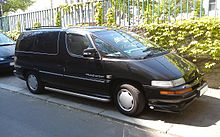
For the european market, the Oldsmobile Silhouette was sold-out 'tween 1994 and 1997 as the Pontiac Trans Summercater by replacing the Oldsmobile badging with Pontiac badging, along with Pontiac wheels. Sales in Europe were operative for an American import, simply did not represent enough volume to arrive at a distinct model economically feasible for the European market. Its successors were some the Chevrolet Trans Sport (Forward generation Pontiac Trans Frolic rebadged as a Chevrolet) (LWB), and the Opel / Vauxhall Sintra (SWB).

The Oldsmobile Alero was sold in select countries in Europe (and Israel) between 1999 and 2001 as the Chevrolet Alero, and was sole available as a 4-doorway sedan chair. The auto even so featured its Oldsmobile badges even up though sold under the Chevrolet brand, merely since to the highest degree European consumers would not agnise the badging, Chevrolet badges were added to the grille and behind facia for the 2000 model year. The Alero featured Chevrolet emblems passim its entire run in Yisrael. The Alero was replaced in Europe and Sio aside the GM Daewoo-sourced Chevrolet Evanda / Epica.
Marketing themes [blue-pencil]
Early on in its history, Olds enjoyed a hearty public relations cost increase from the 1905 hit call In My Merry Oldsmobile. The same theme—a fast, powerful Olds car helping the driver romance the opposite sex—was updated in the 1950s with the iconic murder Rocket 88.
The strong PR efforts by Gram in the 1950s was epitomized in the Motorama, a "one company" auto usher extravaganza. Millions of Americans attended, in a spirit not unlike a "mini-World's Indifferent". All GM division had a "Dream Car". Oldsmobile's dream/construct machine was called "The Golden Rocket".
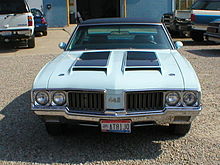
The Dr. Oldsmobile theme was one of Oldsmobile's most roaring marketing campaigns in the early '70s, IT involved fictional characters created to boost the wildly popular 442 muscle car. 'Dr. Oldsmobile' was a leggy lean professor type World Health Organization wore a white laboratory coat. His assistants included 'Elephant Engine Ernie' WHO represented the big block 455 Rocket. 'Shifty Sir Philip Sidney' was a character World Health Organization could cost seen swiftly shifting his hand using a Hurst gearstick. 'Farting Tunnel Waldo' had slicked back hair that appeared to be perpetually wind up blown. He represented Oldsmobile's wind tunnel testing, that produced more or less of the sleekest designs of the day. Another character included 'Hy Spy' World Health Organization had his ear to the land as he checked out the competition.
A PR campaign in the late 1980s proclaimed that this was "not your founding father's Oldsmobile." The company produced a serial of television ads during this time; said ads featured the offspring of several celebrities, and sometimes the celebrity in interrogate. These ads included:
- Frankie Avalon Jr.
- Noel Blanc, son of Mel Blanc
- Amanda Graves, daughter of Saint Peter Graves
- Deborah Moore, daughter of Roger Moore
- Julie Nimoy, girl of Leonard Nimoy
- Lisa Marie Presley, daughter of Elvis Presley
- Jodi Serling, daughter of Rod Serling
- Melanie Shatner, daughter of William Shatner
- Robert E. Lee Starr, daughter of Ringo Starr
- David and Gina Belafonte, son and daughter of Harry Belafonte
Ironically, many fans of the brand say that the declining sales were in fact caused away the "this is not your father's Oldsmobile" campaign, as the largest market for Oldsmobiles was the population whose parents had, in fact, closely-held Oldsmobiles and that by exit outside from the traditional vehicles that Oldsmobile's brand was built upon, lost some loyal buyers and put the steel on a hit course with Pontiac and Buick, which led to internal cannibalization and a ruin from which it could never recover. Oldsmobile's final major ad campaign had the slogan "Part with Something" in a last-ditch effort to market to younger buyers at the turn of the millenary.[36]
Corporate image [blue-pencil]
Logotype evolution [edit]
-

1897
-

1919
-

1960
-

1981
Advertisements [delete]
-

Galveston Daily News, Dec 28, 1902
-

Detroit Medical Journal, 1903
-
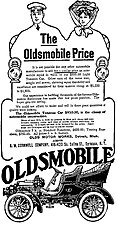
Syracuse Postal service-Standard, September 30, 1904
-

Siege of Syracuse Herald, April 7, 1906
-

La Crosse Tribune, May 8, 1908
-

Mansfield Tidings, April 23, 1910
-

Syracuse Wiley Post-Normal, June 11, 1910
Motorsport [delete]
NASCAR [edit]
Oldsmobile is especially known for its competition in NASCAR. Showtime with the Rocket 88, Oldsmobile proved heavily competitory available auto racing. In the Sixties, the Rocket 88 was replaced by the 442. Eventually, the Cutlas would lead Oldsmobile into the Mid-eighties in front GM reduced its entries to Chevrolet and Pontiac in the Nineties. It was the restyled consistency of the Cutlass Supreme that (on with the Chevrolet Monte Carlo, Buick Regal, and Pontiac Grand Prix) ushered in the downsized cars into NASCAR cup competition. While the Cutlas looked almost identical to the Buick Regal (which scored 35+ victories in the 1981 thru 1985 seasons), the Cutlass (corresponding the Dodge Mirada) didn't take unrivaled checkered flag, and many a teams moved away from information technology in 1983 to the Noble, Grand Prix, and restyled Four-card monte Carlo S. This was a rude awakening to Oldsmobile, which was getting used to wins along the NASCAR lap. The body style of the 1988-92 Cutlass proved to be a winner for NASCAR competition and it visited the victory circle 13 times between 1989 and 1992, when Oldsmobile ended its racing program.[ citation needed ]
IMSA GT [blue-pencil]
In the IMSA GT Championship, Oldsmobile would provide power for IMSA GT Prototypes alongside Chevrolet and Buick. The Cutlass was used in IMSA GTO along with strange vehicles also being used in Trans Am and NASCAR.
IndyCar [edit]
Oldsmobile was an engine supplier in the IndyCar Series along with Infiniti starting in 1997.
Trans Am Series [edit]
The Cutlass was used in the Trans Am Series during the 1980s. Many vehicles also being used in NASCAR at the time were used in Trans Am and IMSA GTO.
See also [edit]
- List of automobile manufacturers
- List of defunct automobile manufacturers of the U.S.A
- Oldsmobile Diesel motor engine
- Oldsmobile Quad 4 locomotive engine
- Oldsmobile straight-6 engine
- Oldsmobile V8 engine
- Irving Jacob Reuter
References [edit]
- ^ "Life history of Ransom money E. Olds". Your Dictionary. Your Dictionary. Retrieved November 25, 2022.
- ^ Michigan Yesterday & Today. Voyageur Crusade. 2009. ISBN9781616731380.
- ^ "Redeem Eli Olds Commemorative Marker". Archived from the original on December 6, 2022. Retrieved June 4, 2022.
- ^ "November 12, 1908 - GM buys Oldsmobile". Nov 12, 2022.
- ^ "1910 1912 Oldsmobile Incomprehensive". ultimatecarpage . Retrieved September 5, 2022.
- ^ a b 1634–1699: McCusker, J. J. (1997). How A great deal Is That in Real Money? A Historical Price Index for Habituate as a Deflator of Money Values in the Economy of the The States: Addenda et Corrigenda (PDF). Land Antiquarian Society. 1700–1799: McCusker, J. J. (1992). How Much Is That in Real Money? A Historical Price Index for Use as a Deflator of Money Values in the Economy of the United States (PDF). American Antiquarian Society. 1800–naturally occurring: Federal soldier Federal Reserve Bank of Minneapolis. "CPI (estimate) 1800–". Retrieved January 1, 2022.
- ^ "Oldsmobile Light Octonary brochure" (PDF) . Retrieved December 12, 2022.
- ^ "Archived re-create". Archived from the original on Nov 20, 2012. Retrieved Nov 10, 2011. CS1 maint: archived transcript American Samoa claim (link)
- ^ https://www.griotsgarage.com/schoolbook/content/havingfun/about-our-cover song-cars/hb371.hypertext markup language
- ^ "Automatic drive Saves Boast And Power" Popular Mechanics, August 1937
- ^ Mateja, King James I (March 13, 1977). "GM engine lawsuit: When does Olds become a Chevrolet?". Newmarket Tribune.
- ^ Gilbert Stuart, Reginald (April 3, 1978). "G.M.'s Mental image Under Fire In New Typecast of Lawsuit; Latest Charges Challenge Internal Operations, Non Size Factors Credibility and Enduringness 'A Set of Principles' G.M. Image Assailed in New Cases Murkier Waters Now 'Little Attention' Given Approach Challenged". The Fresh House of York Multiplication . Retrieved May 20, 2010.
- ^ "How Head-up Displays Work". April 17, 2012.
- ^ "A brief History of GPS In-Car Navigation". April 9, 2022.
- ^ "1901–1907 Oldsmobile Curvy-Dash". December 6, 2007.
- ^ "» Ransom e. Olds | Automotive Lobby of Celebrity".
- ^ https://auto.howstuffworks.com/1901-1907-oldsmobile-curved-dash.htm[ bare URL ]
- ^ "Little-Known History of the Auto Windshield". January 5, 2022.
- ^ "The closing of the road for Oldsmobile".
- ^ The Automobile Maturat By James J. Flink, 1988 page 215
- ^ "Oldsmobile's 1949 overhead valve V-8 launched an locomotive revolution". March 7, 2022.
- ^ "1952 Olds and the First off Headlamp Dimmer". December 23, 2013.
- ^ https://World Wide Web.hemmings.com/blog/2013/04/18/yesterdays-car-of-tomorrow-1962-1963-oldsmobile-jetfire/
- ^ https://www.hemmings.com/blog/2014/11/18/oldsmobile-ford-and-the-rebirth-of-front-wheel-drive out/
- ^ "Domestic Antique Oldsmobile Club and North Texas Oldsmobile Nine Welcome Spectators to a Costless Car Show – Handout – Digital Journal".
- ^ "Computer Will Save Fire on G.M.'s '77 Toronado". The New House of York Times. August 10, 1976.
- ^ Han, P. Z.; Lennon, W. L.; Ratajczak, R. B. (1982). "Recent Chemical and Reinforcement Exploitation in the Reinforced Reaction Shot Molding Process for Machine Applications". Reaction Injectant Molding and Fast Polymerization Reactions. pp. 209–218. doi:10.1007/978-1-4684-8733-6_13. ISBN978-1-4684-8735-0.
- ^ "The Past and Future of the Guide-up Display, the Original Augmented Reality". January 23, 2022.
- ^ "The 1987 Oldsmobile Aerotech Was Non Your Great-Grandson's Oldsmobile".
- ^ "Check out these cars G created in the 1980s with tech decades in the lead of its time". Business organization Insider.
- ^ "Oldsmobile's $1,995 Speaking Map". Windy City Tribune.
- ^ "CNN - Oldest U.S. Car mar seeks new life history as it turns 100 - Noble 25, 1997". CNN.
- ^ https://testdrivejunkie.com/tag/2002-oldsmobile-bravada-pace-railroad car/
- ^ "Southwestern of the Border Fury! 10 Classical Mexican-Grocery Auto Ads". Sept 13, 2022.
- ^ https://blog.consumerguide.com/wp-content/uploads/sites/2/2017/09/1988.png
- ^ In the '90s, General Motors hired marketers from out of doors the auto industry -- gurus of selling soap, toothpaste, liquid diapers and the like. Just given the blunders behind Oldsmobile's failure, perhaps GM should have confiscated its merchandising lessons from wireless instead! Archived June 28, 2006, at the Wayback Machine WINTER, 2001, RESEARCH INSIGHTS.
Further reading [blue-pencil]
- Chevedden, John; Kowalke, Ron (2012). Textbook Catalog of Oldsmobile 1897–1997. Iola, WI: Krause Publications. ISBN978-1-4402-3235-0.
- William Clark, Henry A. (1985). Kimes, Beverly R. (ed.). The Standard Catalogue of American Cars 1805–1945 . Iola, WI: Krause Publications. ISBN0-87341-111-0.
- Gunnell, Toilet, ED. (1987). The Standard Catalog of American Cars 1946–1975. Iola, Badger State: Krause Publications. ISBN0-87341-096-3.
- Lawler, Gospel According to John (February 1994). "1957-58 Oldsmobile: From Beautiful to Baroque". Collectible Automobile Magazine. pp. 22–37.
External links [edit]
 | Wikimedia Commons has media related to Oldsmobile. |
- Confirmed internet site (Archived, 22 July 2003)
- Oldsmobile.com: 2004 Oldsmobile's website — live year of production
- Encyclopedia of Oldsmobile
- The Olds Holiday Golden Anniversary Special
- Oldsmobile Club of America
- Oldsmobile at Curlie
- OutrightOlds.com — Oldsmobile photograph file away, history, concepts, vintage ads, videos, and owners registry.
- Time of origin Oldsmobile Ads
- Radiolive.Centennial State.nz: Alan Lewenthal interview, Oldsmobile F88 owner
1994 Oldsmobile Achieva 2.4l Radiator Fan Relay Test
Source: https://en.wikipedia.org/wiki/Oldsmobile

Post a Comment for "1994 Oldsmobile Achieva 2.4l Radiator Fan Relay Test"